
Keith Young ’26 uses data science for social good in internship
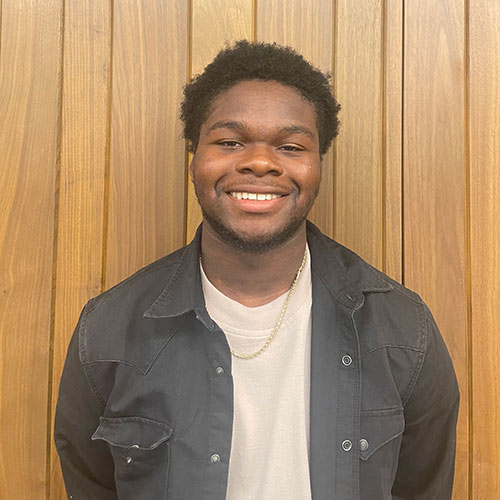
Keith Young ’26, participated in Datalab at Sewanee: The University of the South this past summer. “Datalab is a summer research fellowship program that uses data science for social good,” Young said. “They work with nonprofits and government organizations for solving social problems.” The competitive, full-time, paid fellowship brings students from across the country to hone their data science skills for social impact.
Young’s team, which included students from the Sewanee, worked with the university’s wellness center. “Our goal was to use data from a mental health survey that was given out every year to students at the school and to make correlations in data that could be given to the school administration to showcase the need for better resources for the wellness center,” Young said. “The project helped to provide better mental health resources for the students at Sewanee who were in need of more resources as well as the wellness center staff.”
Young said that Wooster prepared him well for the public speaking portion of the project. “At the end of our project we had to present it in front of an audience,” Young said. “Wooster helped me with the skills of introducing myself and knowing how to contact and talk to people in a professional manner that I wasn’t accustomed to.”
While Young has not declared his major yet, he plans on studying computer science. He is not yet sure how he wants to use his degree after graduation, but participating in Datalab opened up some possibilities for him. “I really enjoyed working with data science, so I’ve begun to consider it,” he said.
Young shared advice for other students planning to do an internship, based on what he learned while participating in Datalab. “To anyone who is preparing for an internship, my best advice would be to make the most of the experience, make connections, make friends, and try to learn as much as possible even if it’s not what you are a part of the internship for,” he said. “It is always good to learn new things, and you never know when you may need them.”
Posted in Experiential Learning on October 18, 2023.
Related Posts


Related Areas of Study
Computer Science
Solve complex problems with creative solutions using computer programming and applications
Major Minor