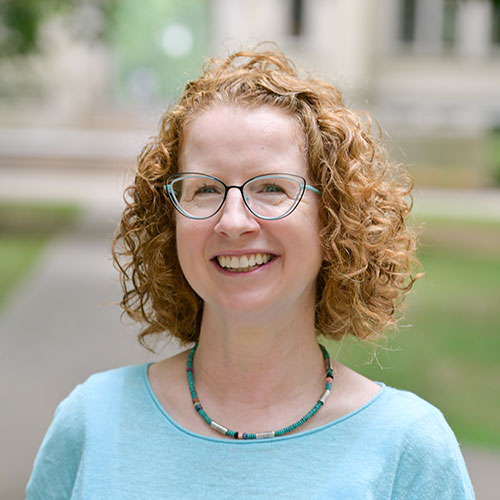
Professor Katie Holt incorporates new techniques to improve student understanding of AI tools
Katie Holt, Aileen Dunham professor of history at The College of Wooster, has used Wikipedia in her classroom since 2017 to strengthen her students’ […]
History is one of the oldest fields of knowledge, but it has never been more relevant than in the fast-changing, interconnected world in which we live.
The study of history is the foundation for a complex understanding of the world. It offers a rich view upon the developments that have shaped the societies we live in; it helps us understand different cultures; it provides a set of rigorous tools for understanding changes and continuities over time; and it offers a high perspective to make sense of the tumult of current events.
The study of history cultivates skills and habits of mind that are essential to a liberal arts education. Students of history will develop the ability to research complex topics, to analyze evidence, to assess conflicting interpretations, to convey ideas with clarity and persuasion, and to build strong arguments. History encourages a subtle understanding of difference. What is more, the study of history provides a set of deep pleasures. Vastly enlarging our experience, the study of the past is a profound source of personal meaning and collective identity.
At Wooster we believe the best way to study history is to do history. In their coursework, students will develop a wide knowledge of the past and a practical understanding of the skills of the historian, culminating in the year-long Senior Independent Study. In classes and seminars, in the weekly I.S. meetings, in departmental colloquia, over lunch with students, and in the corridors and offices of Kauke Hall, faculty offer their perspectives, argue over interpretations, challenge students to think in new ways, and encourage students to ask hard questions.
Visiting Assistant Professor of Chinese Studies; East Asian Studies; History

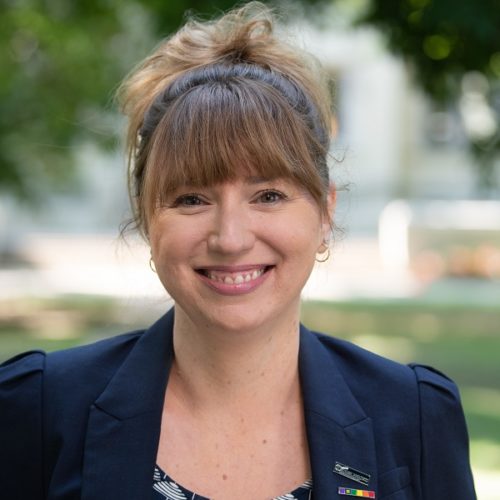
Aileen Dunham Professorship in History; Latin American Studies; Global and International Studies; Co-Liaison to Digital and Visual Storytelling Pathway

Associate Professor of History; Archaeology; Chinese Studies; Program Chair of East Asian Studies; Co-Liaison to the Public Health Pathway
Michael O. Fisher Professor of History; Chair of Global and International Studies; Russian Studies
Henry J. and Laura H. Copeland Professor of European History; Global Media & Digital Studies;
Administrative Coordinator of Political Science, Global and International Studies, History, Latin American Studies and Urban Studies
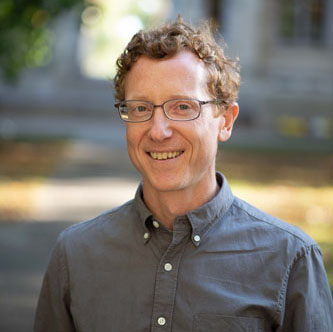
Robert Critchfield Associate Professor of English History; Department Chair of History
Katie Holt, Aileen Dunham professor of history at The College of Wooster, has used Wikipedia in her classroom since 2017 to strengthen her students’ […]
Ibra Sene, associate professor of history and global & international studies at The College of Wooster, was selected to be part of the inaugural […]
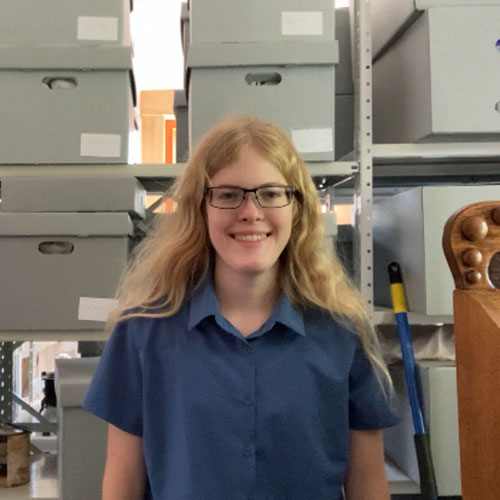
During the summer before her junior year, Allie Toombs ’27 completed an internship at The Field House Museum in St. Louis, Missouri. As a […]
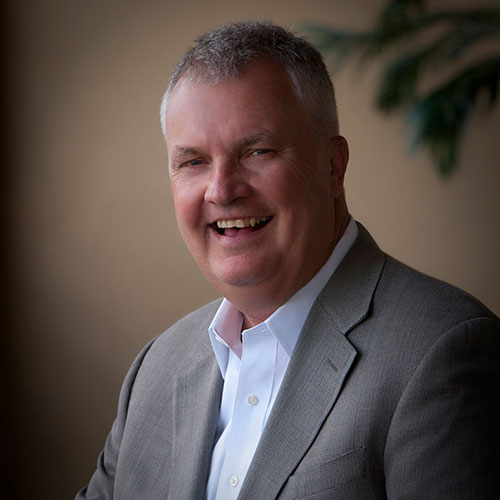
As a baseball player his first year at The College of Wooster, Don Allman ’74 learned how to work as part of a team, […]
The history major is a flexible program that allows every student to pursue their interests while learning the essential elements of historical thinking and methodology, as well as skills in critical thought, research, and written, oral, and digital communication.
A history minor offers the opportunity for grounding in the essential elements of historical thinking and methodology, as well as skills in critical thought, research, and written, oral, and digital communication.
All students in History complete three semesters of Independent Study: a one-semester Junior Independent Study, and the two-semester Senior Independent Study.
The goal of History 401: Junior Independent Study is to help students develop their skills as historians in order to prepare the way for Senior I.S. The course is taught as a tutorial, with weekly one-on-one meetings. Under the guidance of a faculty advisor, students develop, research, and write about a historical topic. Students have the opportunity to develop a valid historical question, conduct research in primary and secondary sources, frame a historical argument, and write a research paper of significant scope. They also learn the time-management skills that are necessary to complete Senior I.S. History 401 can be taken in the fall or the spring semester.
History 451-2: Senior Independent Study is the culmination of the History curriculum. With the guidance of a faculty advisor, students design a research project, gather evidence, and present their conclusions in a formal thesis. Working one-on-one with a faculty advisor and engaging in the debates of professional historians, History majors develop the practical and analytical skills necessary for tackling problems not only in history but also in matters of contemporary concern.
There are few limits to the kinds of subjects that can be pursued for a Senior I.S. In the last few years, students have studied Japanese animation, the “Lost Cause Mythology” of the Civil War, conflict diamonds in Africa, British seaman and their pranks in the Napoleonic era, the CIA in Cold War Berlin, cemetery preservation in Wayne county, the economy of Côte d’Ivoire, and many, many other topics.
There are alternative models for the presentation of historical research as well. Wooster students have successfully completed their Senior I.S. by producing a film documentary, mounting a public history exhibition, writing a historical novel, and developing a high school curriculum.
View I.S. Handbook for History (pdf)
| Student | Year | I.S. Title | Major 1 | Major 2 | Advisor |
|---|---|---|---|---|---|
| Please search to view results | |||||
If you love the study of history, you will find the history program at Wooster to be an excellent preparation for your future.
Our graduates have gone on to prominent careers in academia, law, medicine, business, government, intelligence,
print and broadcast journalism, political advocacy (environmentalism, poverty, civil rights, peace activism, etc.), foreign service, politics, work in museums and archives, public history, foundation work, library science, teaching at the primary and secondary levels, and more.
Recent graduates have gone on to advanced studies in prestigious programs at Columbia University, Cornell University, Indiana University, New York University, The University of California, the University of Michigan, Vanderbilt University, and elsewhere.
Read more stories about Wooster history graduates on The Department of History blog.
The Robert G. Bone History Prize is awarded to that person having completed the junior year with a major in history who best exemplifies the qualities of Robert G. Bone ’28: enthusiasm for learning; unbridled curiosity about life; and unbounded kindness toward others.
The Cummings-Rumbaugh History Prize honors the memory of Mildred Rumbaugh Cummings and Clarence W. Cummings. Mr. Cummings was a member of the class of 1912. It is awarded to seniors with high academic standing.
The Aileen Dunham Prize in History was established in 1965 in honor of Professor Aileen Dunham, Chairperson of the Department of History, 1946-1966. It is awarded annually to the senior major who has attained the highest rank in history.
The James R. Turner Prize in History was established in his memory in 1986. Professor Turner was a member of the History Department from 1969 to 1986. The History Prize is awarded to the student with the most distinguished Junior Independent Study Thesis.
The Aileen Dunham Scholarship in History was established in 1965 in honor of Professor Aileen Dunham, Chairman of the Department of History, 1946-1966. It is awarded annually to a student who has achieved excellence in history courses and who demonstrates financial need.
The Helen K. and Ernest S. Osgood Scholarship Fund was established in 1984 by Helen Kaslo Osgood, a member of the History Department for thirty years beginning in 1951. In 1958 she married Ernest S. Osgood, Emeritus Professor of History, University of Minnesota. His activities at Wooster included advising Independent Study students in history, which gave him much pleasure. The scholarship is awarded annually, in consultation with the Department of History, to a junior or senior history major who has demonstrated high academic achievement and financial need.
The David O. Wise Endowed Scholarship was established by David Wise, a member of the Class of 1969, to honor his 50th reunion and the outstanding faculty mentors he had as a student at the College. Income from the fund shall be awarded each year to a rising senior History major who has demonstrated the highest academic achievement within the Department of History, including Junior Independent Study, and who also has demonstrated financial need.
The Henry J. Copeland Endowed Fund for Independent Study was established in 1995 by members of the Board of Trustees in recognition of Mr. Copeland’s leadership as President from 1977 to 1995 and his commitment to the College’s goal of supporting students in meeting the highest standards of achievement. All members of the Board contributed to the fund, and major gifts were provided by Ed and Edie Andrew, Stan and Flo Gault, and Fran Shoolroy. Income from the endowment is used to assist students with unusual research expenses associated with their Independent Study projects.
The Michael Gill Davis Endowed Travel Research Fund was established in 2014 by Merrily Siepert Davis, a member of the class of 1965, in honor of her son, Michael Gill Davis, a member of the class of 1991. Income from the fund shall provide financial support for education and research opportunities for students within the Department of History at The College of Wooster, with first preference given to opportunities related to the study of American History. When possible, income from the fund may also support research-based travel and related expenses for students working on their Junior or Senior Independent Study in American History, or gain access to materials and documents at venues such as libraries, museums, and other institutions. In addition, this includes supporting outside scholars to visit the Department of History in person or virtually.
The Discovery Learning Endowment was established in 2017. Income from this fund shall provide funding to support student research and experiential learning at The College of Wooster in the Department of History, including expenses related to student travel for research, TREK programs and other iterations of faculty-led study abroad experiences, and research tied to Independent Study. Income from the fund shall not be used to support internships.
The Kendall-Rives Endowed American Research Grant was established in 1995 by Paul L. Kendall ’64 and Sharon K. Rives of Randolph, Vermont. The fund supports research projects conducted in a Latin American country as part of, or in preparation for, a Senior Independent Study project on some aspect of U.S.-Latin American relations. Allocation of these funds to a sophomore or junior who is proficient in Spanish or Portuguese is made by the Dean for Faculty Development on the advice of the student’s academic adviser and the Kendall-Rives Committee. In 2013, the donors expanded the fund’s criteria as follows: Any unspent income from a given year will accrue in an operating account for subsequent disbursements in accordance with the restrictions of the endowment. For the purposes of this fund, “Latin America” shall be defined to include areas south of the border so that Mexico, Brazil, Haiti, Puerto Rico, Costa Rica, and other countries in this geographic area shall apply equally.
The Lawrence Stanley Summer Research Program Endowment in History was established in 2007 by Laura Stanley Gunnels in honor of her father and the 50th anniversary of the class of 1958. Mrs. Gunnels shared with her father an interest and passion for history and established the summer research endowment to support student research in history. Her intent is for students to develop the passion and habits of mastery that will advance the study of history in perpetuity. First preference is given to students following their first-year at Wooster. Each student is partnered with a faculty research advisor.
Request Funding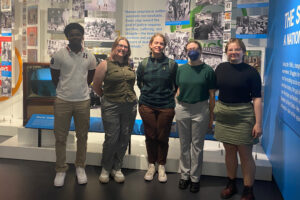
2024 Team (left to right): Keith Young ’26, Heather Cook ’25, Abby Frock ’26, Grace Pryor ’26, Anna Whiting ’26
For six to eight weeks each summer, students from a variety of backgrounds conduct interdisciplinary, community-based research as part of a paid internship guided by faculty in the Department of History and supported by Educational Technology. The project’s main exhibit is a publicly available website that explores Wooster’s history from early Indigenous settlement to the present. Originally, all exhibit topics displayed on the website were chosen by students, which are archived and accessible on the WDHP website. In 2017, faculty advisors began consulting with community partners to select new topics of research, which now vary by year. With these newer projects, students strengthened ties between the College and the local community through the medium of public history. This is done by consulting work with community partners to incorporate their perspective on Wooster’s history.
By conducting and leading research projects for community partners and exploring the past and present of the city around them, students learn more about the place where they live and build connections within Wooster. During their time working for the project, students build on historical research, oral history, and writing skills that they have learned in classes. They also develop professional skills like project management, communication, and collaboration with peers, faculty, and community partners in the only program of its kind in the nation.
Being involved with the WDHP has helped me recognize a broader set of possibilities for working within the field of history. Talking to different alumni of the project was especially helpful for seeing the different ways a history degree can be utilized after graduation.
-Grace Pryor ’26, History major, Political Science minor, Museum and Archival Studies pathway
The Wooster Digital History Project helped me see the value of historical research and community partner work in every field, not just history. It has also helped me to see the value of understanding everyone’s stories, through methods such as oral history, in order to understand a community of people which is something I will take into any future career I pursue, not necessarily through oral history itself, but understanding individuals before making decisions about the past, present, or future of a community is extremely valuable and important.
-Heather Cook ’25, Political Science (U.S. National Politics) and History double major, Religious Studies minor
My experience with the WDHP has opened my eyes to more possibilities within the digital humanities, such as different digital tools for the archiving, preservation, and sharing of information. I’ve also been lucky enough to connect with a variety of professionals in the field who have helped me expand my professional network and learn about graduate school, internships, and paths to take after I graduate from Wooster.
-Anna Whiting ’26, English and Sociology double major, Museum and Archival Studies pathway
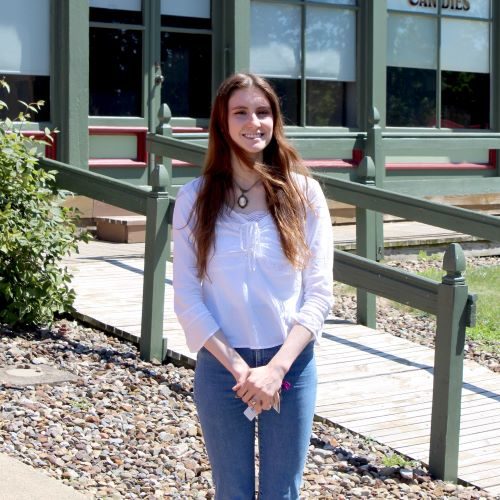
History has been a part of life for Glenna Van Dyke ’23 since being born into an Irish-American family in Pittsburgh. She took up […]
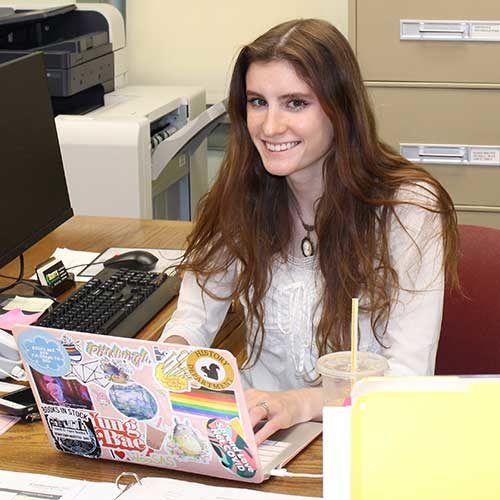
Through her position as an intern at the Wayne County Historical Society, College of Wooster student Glenna Van Dyke ’23 immersed herself in the […]
Lincoln Professor of Religion and Professor of History; Middle Eastern and North African Studies