The College of Wooster will welcome three speakers for a series of lectures and dialogues titled Democracy and Academic Freedom, A Forum. Speakers will address a range of topics, reflecting on academic freedom in global, institutional, and educational contexts, with a Q&A session to follow.
The series, which begins Wednesday, Sept. 3, includes the annual Constitution Day and Bell Lecture in Law on Sept. 17, and the Annual Lindner Lecture on Ethics on Oct. 15. Open to the public, the talks will take place in Gault Recital Hall of Scheide Music Center (525 E. University Street) at 7:30 p.m. and will also be live streamed on this page.
Democracy and Academic Freedom: A Forum is supported by the Office of the President, Department of Philosophy, Lindner Endowment, and Bell Distinguished Lectureship in Law.
Contemporary Attacks on Academic Freedom: Historical and Comparative Politics
Presenter: Eve Darian-Smith, Distinguished Professor and Chair, Department of Global and International Studies, University of California, Irvine
- Wednesday, Sept. 3, 7:30 p.m. | Gault Recital Hall, Scheide Music Center
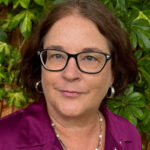 Eve Darian-Smith opens the series with “Contemporary Attacks on Academic Freedom: Historical and Comparative Perspectives,” a talk addressing attacks on colleges across the United States and similar attacks now occurring around the world. Darian-Smith is distinguished professor and chair of the Department of Global and International Studies at University of California, Irvine. Her most recent book, “Policing Higher Education: The Antidemocratic Attack on Scholars and Why It Matters,” examines the essential role of higher education and academic freedom in thriving democracies.
Constitution Day/Bell Lecture in Law: The First Amendment and Campus Speech: An Institutional Approach
Presenter: Jamal Greene, Dwight Professor of Law, Columbia Law School
- Wednesday, Sept. 17, 7:30 pm | Gault Recital Hall, Scheide Music Center
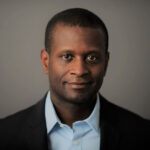 Jamal Greene, Dwight Professor of Law at Columbia Law School, will deliver the annual Constitution Day and Bell Distinguished Lectureship in Law, titled “The Art of the Deal: Free Speech in the Age of Trump.” Greene is the author of “How Rights Went Wrong: Why Our Obsession with Rights is Tearing America Apart,” as well as numerous scholarly articles and book chapters on constitutional law and theory.
Lindner Lecture: Academic Freedom and Academic Responsibility
Presenter: Bob Talisse, W. Alton Jones Professor of Philosophy, Vanderbilt University
- Wednesday, Oct. 15, 7:30 pm | Gault Recital Hall, Scheide Music Center
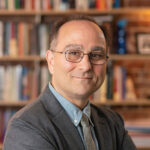 Robert Talisse, W. Alton Jones Professor of Philosophy at Vanderbilt University, delivers the Annual Lindner Lecture in Ethics, titled “Academic Freedom and Academic Responsibility.” Talisse, author of “Civic Solitude: Why Democracy Needs Distance,” will explore the responsibilities that correspond with the guarantee of academic freedom and the liberty of professors to pursue and teach their areas of expertise.