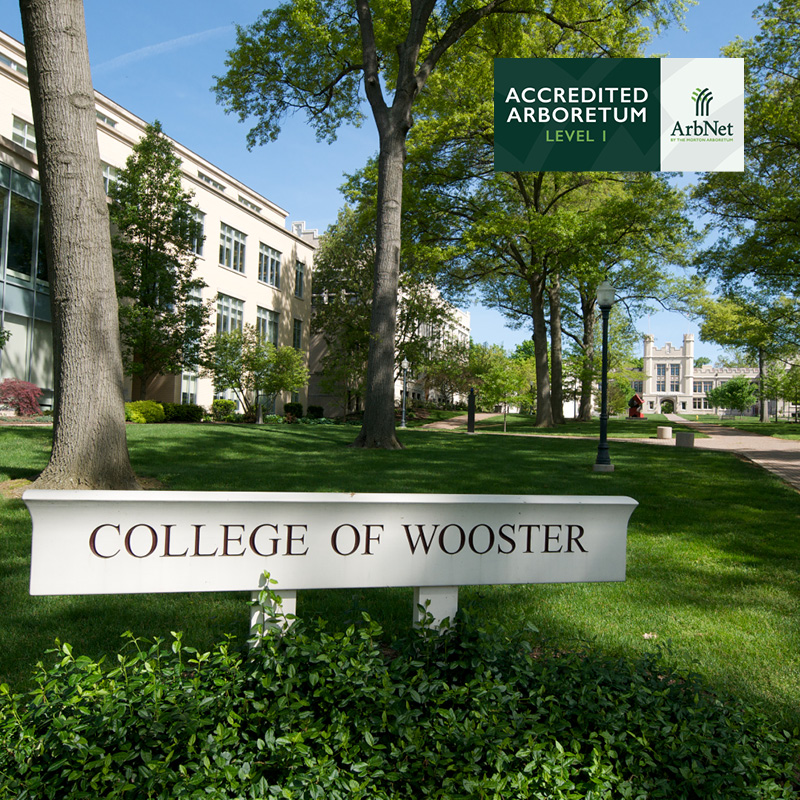
Seven-figure gift establishes Abbey Arboretum at Wooster
A seven-figure gift from The College of Wooster alumnus Paul Abbey ’73 and his wife, Constance Norweb Abbey, has established the campus-wide Abbey Arboretum […]

Environmental issues are among the most important areas of concern for college students today. From biodiversity to plastic pollution to sustainable food systems to the climate crisis, students are increasingly concerned about the ways that our actions shape the world around us. The College of Wooster takes these challenges seriously, and we are working hard to create a culture of sustainability on campus. Our approach to sustainability is woven throughout all areas of the college, including in the classroom, in facilities operations, in student organizations and student programming, in administrative decision-making, in employee engagement, and in our relationship to the broader Wooster community. Follow the links below to learn more about what we’re doing and how you can get involved.
Climate change poses one of the most urgent issues facing humanity, and The College of Wooster is committed to responding to this crisis with bold ambition. The science is clear. The earth is warming at an ever-accelerating rate; humans are the cause (principally because of greenhouse gas emissions from burning fossil fuels); and the results are already catastrophic for millions around the world.
More Information
The College of Wooster launched ScotShare, an electric carsharing program for students, faculty, and staff, to promote sustainability and reduce emissions. Users can rent one of two Chevy Bolt EVs for $9 per hour, including electricity and insurance, for both personal and business needs. The College is also expanding its electric vehicle infrastructure with charging stations and transitioning its fleet to electric vehicles.
 Waste and Recycling
At the College of Wooster we do our best to recycle as much as possible, but it’s important to understand that effective recycling starts with you.
Learn More about Recycling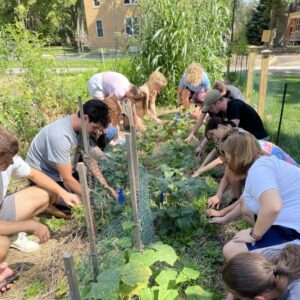 Sustainability in Action
The College of Wooster prioritizes environmental stewardship through various initiatives, including a learning garden, a 20,000 square-foot solar array atop the Scot Center, and the Swanson-Harbage Green Revolving Fund which supports projects that benefit the environment and the College.
Learn More Green Office Program
The Green Office Program is a self-rating system for campus offices and departments that helps advance sustainability on The College of Wooster campus. The program has two goals. First, we want to encourage sustainable behaviors among employees. Second, we aim to reduce energy usage and cost. See the link for details about how the program works and how to sign up.
Learn More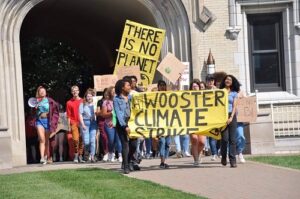 Get Involved
There are many ways Wooster students can get involved in making a different for sustainability, including simple things like carpooling and using ScotShare to interning with the Sustainability Office.
Learn More About How to Get Involved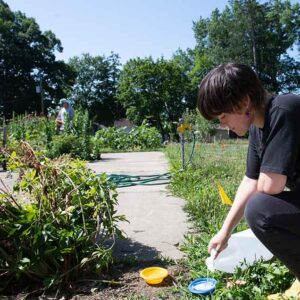 Education and Research
Learn more about the interdisciplinary programs, pathways and projects that the College of Wooster offers for Environmental and Sustainability Studies.
Learn More
Director of Campus Sustainability; Sustainability Pathway Liaison
Director of Campus Sustainability; Sustainability Pathway Liaison
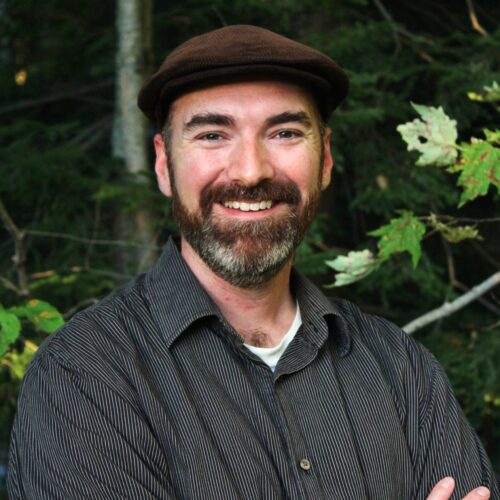
Brian Webb serves as the Director of Campus Sustainability, with his primary responsibility being to lead the college’s efforts to promote environmental stewardship at an institutional level. This includes planning sustainability events and programs, working with faculty to incorporate sustainability into the curriculum, partnering with facilities to reduce energy usage, and coordinating with the administration to implement policies and procedures that help elevate Wooster’s position as a leader in environmental sustainability.
Before coming to Wooster in August 2023, Brian worked at Houghton University as the Director of Sustainability and as an Assistant Professor of Environmental Studies. Under Brian’s leadership, the college achieved a 46% carbon footprint reduction in just ten years. In 2020 Brian helped create a new Environmental Studies academic program, where he taught such creative courses as Global Climate Leadership, Environmental Communication, Environmental Public Policy, and God, Country, and Climate Change.
Brian brings a diverse academic background to Wooster, with an undergraduate degree in French, a master’s degree in Experiential Education from Minnesota State University, and a second master’s degree in Sustainability and Environmental Management from Harvard Extension School. Brian also serves as an active leader in the faith-based environmental movement and co-directs the Christian Climate Observers Program, which mentors emerging faith leaders by bringing them to the annual UN climate conference. His research area of interest centers around the intersection between climate change policy, environmental communication, and faith communities in the United States and elsewhere.
Brian enthusiastically enjoys many outdoor activities, especially mountaineering, hiking, camping, birding, and ultimate frisbee. He loves to travel with his family, and has a life goal of climbing the highest peak in all 50 U.S. states. Brian comes to Wooster with his wife, Becky, and their three children—Cadie (14), Lilee (12), and Ian (10).
Campus Dining and Conference Services has implemented the following to become more fiscally and socially responsible and operate in a more environmentally sustainable manner. We are reducing the use of disposable items and their environmental impact:
We are increasing our use of local foods:
We attempt to minimize our energy use and minimize our landfill impact:
The Campus Grounds crew has implemented a number of environmentally sound practices in their efforts to keep the College of Wooster campus in beautiful condition, including:
To highlight the importance of environmental sustainability on campus, Beau Mastrine of the campus grounds crew evaluated and described the importance of trees on The College of Wooster campus.
Our Facilities team works hard to improve the energy efficiency of our campus, decrease our carbon footprint, and lower our energy costs as well!

Scot Center Rooftop
Scot Center, our LEED Gold certified athletic center, is home to a 20,0000 square foot rooftop solar array that provides energy daily to the college. Check out the energy production here, in real time! All new constructions are always designed with LEED tandards in mind.
The College of Wooster also uses energy produced from a steam turbine on campus, and has shifted from the use of coal to natural gas. A STARS report was conducted in 2013, granting the college Silver status.
View this profile on Instagram
A seven-figure gift from The College of Wooster alumnus Paul Abbey ’73 and his wife, Constance Norweb Abbey, has established the campus-wide Abbey Arboretum […]
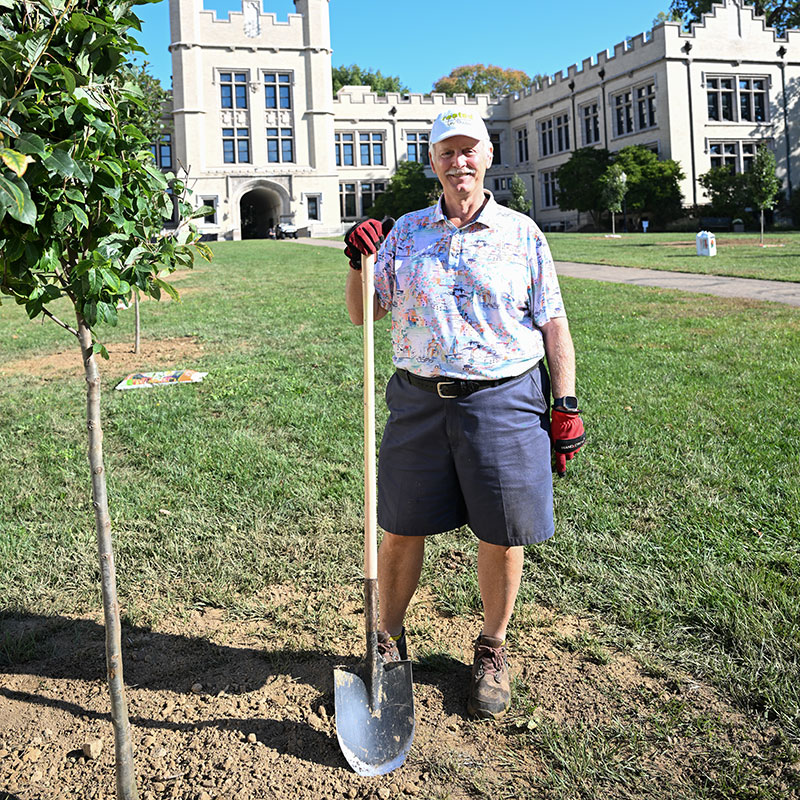
On Tuesday, Sept. 30, The College of Wooster celebrated the planting of two striking rows of Black Tupelo “wildfire” (black gum) trees outside Kauke […]
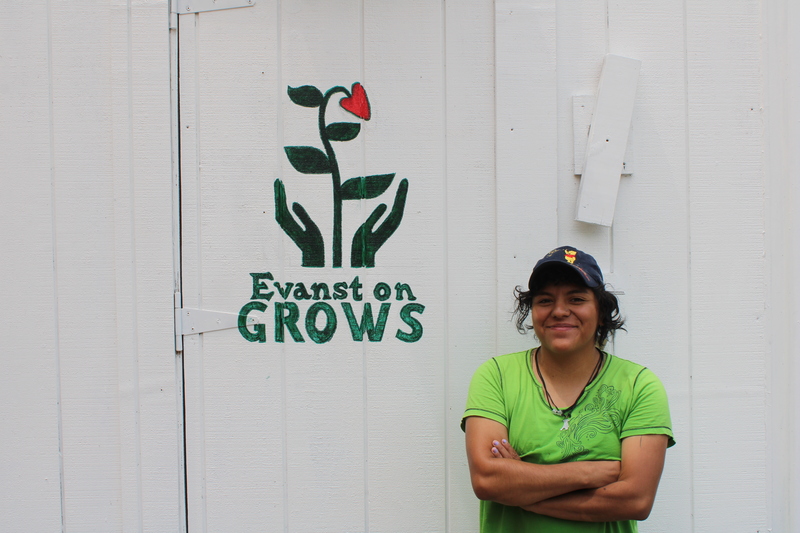
Britza Ruiz ’27, a biology and education major with a pathway in sustainability at The College of Wooster, interned at Evanston Grows, a collective […]
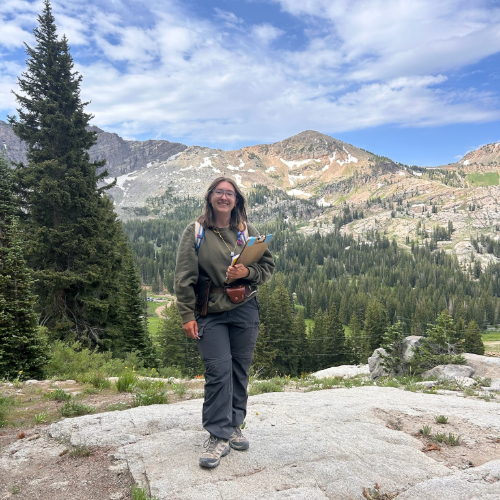
During the summer before her senior year at The College of Wooster, Lauren Segura ’26 attended a Summer Field Camp with the School of […]