
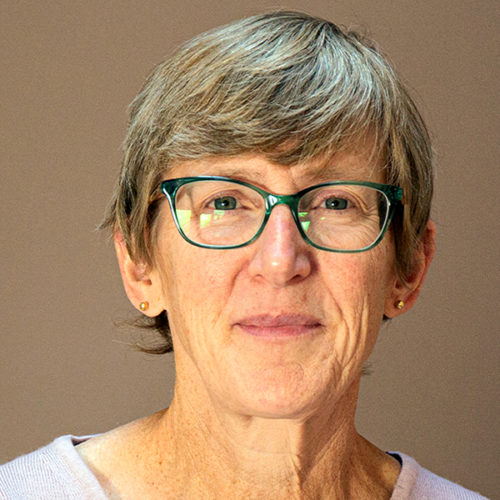
Susan ClaytonWhitmore-Williams professor of psychologyChair of Environmental Studies
|
|||||||
BackgroundSusan Clayton is a professor of social psychology. She received her B.A. from Carleton College in 1982 and her M.S., in 1984, and Ph.D., in 1987, both from Yale University. She is a Fellow of the American Psychological Association (APA), the Society for the Psychological Study of Social Issues (SPSSI), and the Society for Population and Environmental Psychology, and a member of the International Society for Justice Research (ISJR) and the Society for Personality and Social Psychology. Clayton is on the editorial boards for the Journal of Social Issues, the Journal of Environmental Psychology, Human Ecology Review, and Environmental Communication. She is the past-president APA's Division 34, the society for population and environmental psychology. In 2009 she will become the editor of Human Ecology Review, the journal of the Society for Human Ecology. |
|||||||
CoursesRegular course offerings include Social Psychology, Psychology of Women and Gender, and Environmental Psychology. Special courses on an irregular basis include Psychology and Law, Self and Identity, Peace and Conflict, and (with Lyn Loveless in the Biology Department) Protecting Nature: The How and Why of Conservation. I have also offered first-year seminars in Environment and Identity, and Humans and Other Animals. Fall 2008:
Spring 2009:
|
|
||||||
Research InterestsEnvironmentThe natural environment plays an important part in many people's work, recreational, and/or emotional lives.My research examines the ways that people think about, and make personal connections to, the natural environment. I developed an Environmental Identity (EID) Scale to assess the degree to which the natural environment plays an important part in the way in which people think about themselves. A book which I edited (with Susan Opotow of the University of Massachusetts) on Identity and the Natural Environment (2003; MIT Press) presents a variety of empirical approaches to the ways in which people think about themselves with regard to the natural environment, and how the natural environment intersects with our group and social identities. I am particularly interested in how people make connections to the natural environment in their daily lives, through such venues as gardening and visits to urban parks and zoos, and how they think about their relationship with nature, including their environmentally-relevant behavior. Conservation psychology is a relatively new field of research, drawing primarily from psychology but encompassing other disciplines as well, with the dual aim of understanding the relationships between humans and the natural world and promoting behavior that protects the natural environment. Topics that fall within conservation psychology include studies of conservation behaviors such as recycling; of the human-animal relationship; about environment and identity; on environmental education and socialization; on environmental attitudes; and on environmental conflict. Conservation psychology is distinctive in its problem focus and its outcome-based orientation: the goal of conservation psychology is to promote sustainable behavior. Click here to find out more about this emerging field and the people who are involved. Group IdentityWe all belong to different groups, but the extent to which these groups affect our self-image and self-definition varies from person to person and across situations. Gender, for example, is something everyone has, but its significance and meaning vary. My research on gender has primarily concerned policies of affirmative action: why and whether affirmative action is needed and how people react to the use of group identities (such as gender) for affirmative action purposes. My first book (Justice, Gender, and Affirmative Action), with Faye Crosby, examined this topic. I am also interested in the role of gender at work, and the question of when and to what extent gender constitutes a group identification for people. JusticeThe various ways in which people define justice are a long-standing research focus; I am particularly interested in circumstances under which people define justice for the society, group, or other collective as opposed to the individual level. Both gender, as an individual difference variable, and the environment, as a contextual variable, seem to affect on people's willingness to define justice at the collective level. Most recently I have been exploring the implications of identity for the ways in which people think about justice. Sense of oneself as a group member affects beliefs about what is fair in sociopolitical contexts. A sense of oneself as connected to, or separate from, the rest of nature affects beliefs about whether nature, and animals in particular, have rights that must be respected.
|
|||||||
Recent PublicationsBooksClayton, S., & Myers, G. (2009). Conservation psychology: Understanding and promoting human care for nature. Oxford, UK: Blackwell. Clayton, S., & Opotow, S. (2003, Eds.) Identity and the natural environment: The psychological significance of nature. Cambridge, MA: MIT Press. ArticlesClayton, S. (2009). Sustainable development. In N. Young (Ed.), International Encyclopedia of Peace. Oxford, UK: Oxford University Press. Fraser, J., Clayton, S., Sickler, J., & Taylor, A. (2009). Belonging at the zoo: Retired volunteers, conservation activism, and collective identity. Ageing and Society. Clayton, S., Fraser, J., & Saunders, C. (2008). Zoo experiences: Conversations, connections, and concern for animals. Zoo Biology. Clayton, S., Garcia, A., & Crosby, F. (2008). Women in the workplace: Acknowledging difference in experience and policy. In N. Russo & H. Landrine (Eds.), Handbook of diversity in feminist psychology. New York: Springer. Clayton, S. (2008). Attending to identity: Ideology, group membership, and perceptions of justice. In K. Hegtvedt & J. Clay-Warner (Eds.) Advances in group processes: Justice. Elsevier Science. Clayton, S. (2007). Domesticated nature: Motivations for gardening and perceptions of environmental impact. Journal of Environmental Psychology. Clayton, S. (2005). Jobs with justice: A Review of “Just Work” by Russell Muirhead. Social Justice Research, 18, 465-480. Clayton, S., & Brook, A. (2005). Can psychology help save the world? A model for conservation psychology. Analyses of Social Issues and Public Policy, 5 (1), 87-102. [For full c.v., click here]
|
|||||||
Current ProjectsFor the past few years I have been studying zoo visitors. Why do people visit zoos? What is it that is appealing about observing non-human animals? And what are the ways in which these interactions with other animals affect us? A number of Wooster students have been involved in this zoo research. So far we have collected data at the Cleveland Metroparks Zoo, the Brookfield Zoo in Chicago (with the help of Carol Saunders), and the Bronx Zoo (in collaboration with John Fraser).
A new project concerns the relevance of the natural environment to conflict. Increasingly, competition over environmental resources is recognized as a source of international conflict and a threat to international stability. The struggle for diminishing environmental resources can create or exacerbate tensions between existing social groups. But can a shared investment in protecting the environment reduce intergroup conflict? That is one of the hopes behind the many transboundary protected conservation areas, more colloquially known as "peace parks." With Dr. Saleem Ali of the University of Vermont and a group of collaborators, I am beginning to plan research investigating the impact of shared environmental benefits and concerns on intergroup relationships, both in the lab and in the real world. Putting theory into practiceMy conviction that the environment is psychologically significant leads me to be concerned with protecting it, within my institution and within my profession. On campus: Among psychologists:
|
|||||||
Recent Independent Studies SupervisedNatalie Gertz, "In support of natural beauty: A study of the effects of urban and national parks on conservation attitudes and mood" Dave McNew, "Fighting the inevitable: The effects of religious orientation and mortality salience on self-esteem and anxiety" Kerry Melenovsky, "Psychosocial characteristics of rural Tanzania for interventionists planning a health reform" Martina Ward, "Liberty and justice for all? The influence of media exposure and socioeconomic identity on perception of crime" Steve Zumbrun, "Diminishing the other-race effect: An investigation into creating better cross-cultural facial recognition using social categorization" |
|||||||
![]() |
|
||||||
| Last modified: October, 2008 | |||||||