What kinds of jobs are available for sociology majors?
Many sociology graduates from The College of Wooster go on to graduate school in sociology or related fields. Those who enter the job market have started careers in business, education, law, public administration, public health, social work, counseling, research, and criminal justice. Recent graduates include a high school principal, journalist, research fellow and other roles.
Sociology at The College of Wooster
The program emphasizes the value of learning how to deal with contemporary social issues and how to develop problem-solving and research skills. Students have abundant opportunities to learn and conduct research outside the classroom, including a course taught once a year in a juvenile prison and semester programs abroad. Faculty members bring expertise in systems of inequality, race and ethnicity, gender, medical systems, welfare reform, criminology, nonprofit work, environmental advocacy, etc. Students can opt to be part of a 3-2 program with Case Western Reserve University, allowing them to graduate with a bachelor’s degree and a master’s degree in social work in five years.
Administrative Coordinator - Africana Studies, Archaeology, East Asian Studies, Middle Eastern & North African Studies, Religious Studies, Sociology and Anthropology, South Asian Studies, Urban Studies, Women's, Gender, and Sexuality Studies
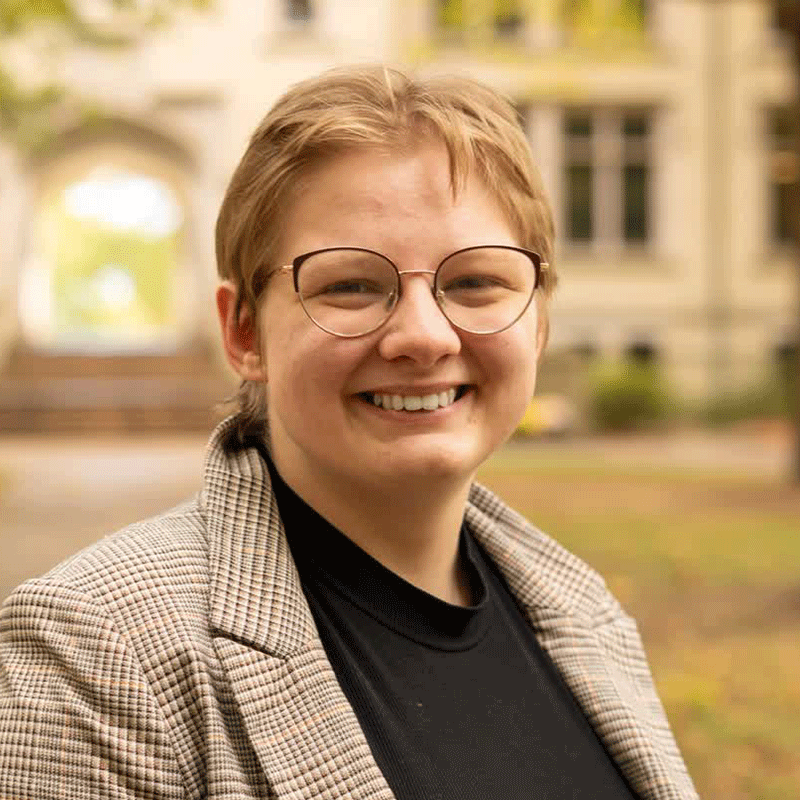
As a first-generation college student, Anna Whiting ’26 of Westerville, Ohio, dealt with perfectionism and imposter syndrome, but completing her Independent Study at The […]
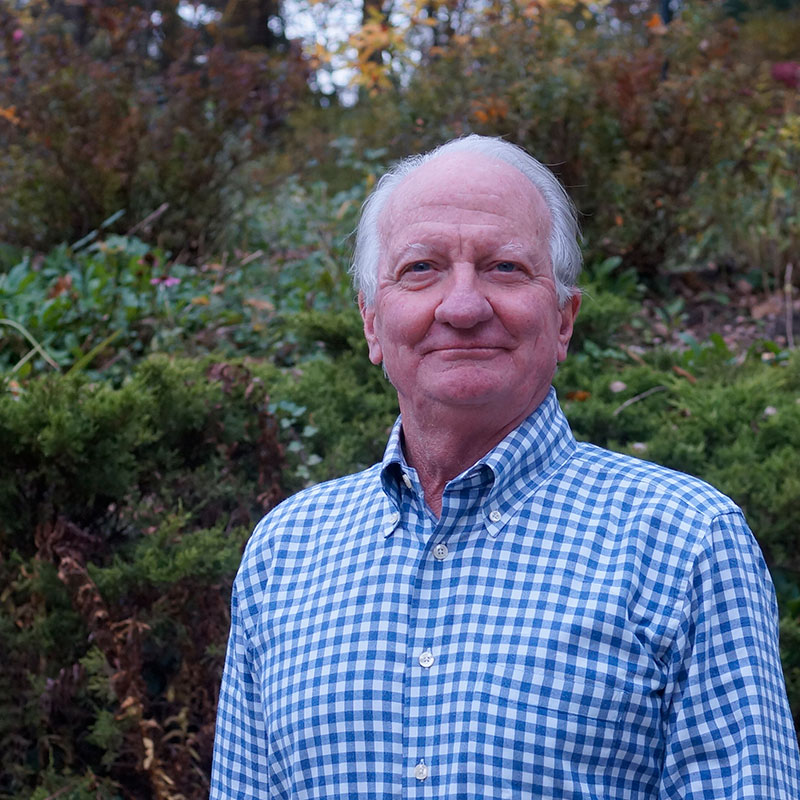
Thanks to a baseball coach, an Independent Study advisor, and an inspiring author-turned-boss, Bill Colvin ’79 knows the power of consulting. Now the founder […]
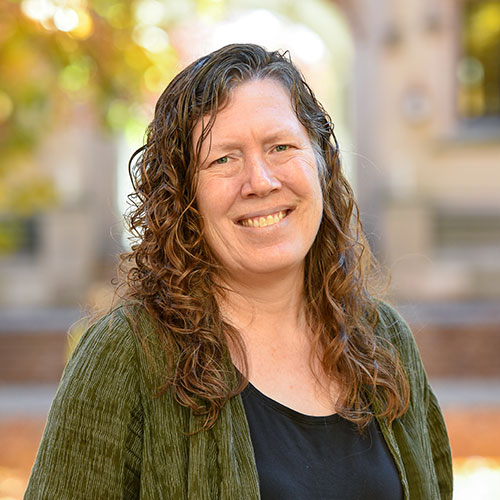
Anne Nurse, professor of sociology at The College of Wooster, recently published a co-authored article on the importance of teaching data reproducibility, or the […]
The basic challenge in sociology is to understand ourselves and others more fully. The discipline asks us to probe beneath the surface and to question why people behave as they do, especially in group situations. The sociological perspective asks us to question what we often take for granted, why our society operates as it does, and how our social arrangements could be different.
Students who major in sociology must take 12 department-related courses, including courses in anthropology, social statistics, classic and contemporary social theory.
In the senior year, each student works with a faculty mentor to conduct an intensive investigation into a subject of the student’s choosing, which results in the Independent Study thesis. Recent students have explored major social problems such as crime, homelessness, or poverty as well as issues affecting individuals and families such as college dating behavior, the effects of athletic participation on academic performance, and working mothers.
Search the I.S. Database
Student Last:
Year:
I.S. Title:
Major:
Advisor Last:
Student
Year
I.S. Title
Major 1
Major 2
Advisor
Please search to view results
Alumni
Many majors elect to enter graduate study in sociology. Others move into careers in business, education, law, public administration, social work, counseling, museum studies, and criminal justice. For example, one recent graduate is working as a career counselor at Georgetown University; another is an associate attorney in a law firm; others have titles ranging from medical social worker to college librarian to bank manager.
Lectures
Stieglitz Memorial Fund
In 1989 Mr. and Mrs. Lewis N. Stieglitz, M.D. from Concord, New Hampshire, established an endowed fund in memory of their son Martin, a Sociology major, who died in an off-campus apartment fire, spring semester, 1989. The fund enables the Department to invite prominent sociologists and anthropologists to campus each year as Stieglitz Lecturers.